
 https://mindfullynowtherapy.com/wp-content/uploads/2026/11/healing-relationship-trauma-1.png
1022
1536
Karla Basulto
https://mindfullynowtherapy.com/wp-content/uploads/2025/05/Mindfully-Now-Therapy-Calgary-logo-300x126.png
Karla Basulto2026-11-24 10:31:592026-11-24 10:31:59Healing Relationship Trauma Together | Calgary Couples Counselling
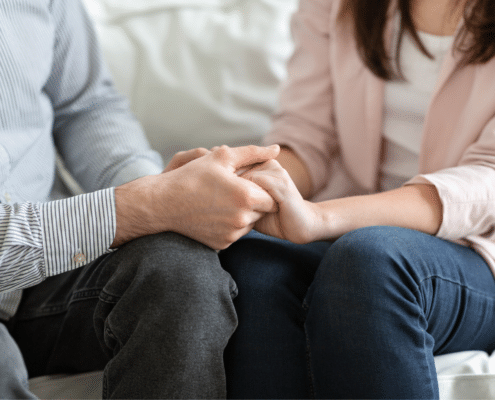
Healing Relationship Trauma Together
Calgary Couples Counselling

When the Past Enters the Room: Navigating Trauma Within Your Relationship
When we fall in love, we rarely arrive alone. We bring our histories, our coping strategies, and our past wounds.
Trauma—whether rooted in childhood neglect, emotional or physical abuse, past toxic partnerships, or shared adult crises—has a persistent way of intruding on the present. While couples often believe their arguments are about unwashed dishes, busy schedules, or finances, beneath the surface frequently lies an unhealed nervous system reacting to an old injury.
Understanding how trauma operates inside a relationship is the first step toward transforming recurring conflict into mutual safety and genuine healing.
How Trauma Secretly Manifests in Relationships
Trauma alters how the brain perceives safety and threat. In an intimate partnership where vulnerability is required, those threat alarms fire often. Trauma rarely announces itself with clinical precision; instead, it tends to show up in routine daily interactions:
-
The Fight-or-Flight Cycle (Pursuit and Withdrawal)When a discussion gets tense, one partner’s nervous system may perceive danger and demand immediate resolution through emotional intensity, relentless questioning, or anger. Meanwhile, the other partner’s trauma response may be freeze or flight—shutting down completely, becoming emotionally distant, or walking out of the room. This common “pursuer-distancer” dance leaves both people feeling abandoned and misunderstood.
-
Hypervigilance and Misinterpreting CuesPartners carrying unresolved relational trauma often walk on emotional eggshells. A slight shift in tone, a delayed text, or a neutral facial expression can be instantly interpreted as impending rejection, anger, or abandonment. The body reacts to the perceived danger before logic can intervene.
-
Loss of Emotional and Physical IntimacyVulnerability requires a felt sense of safety. If intimacy has historically resulted in pain, betrayal, or boundary violations, opening up emotionally or physically can trigger deep resistance. One or both partners may build invisible walls to keep themselves safe, inadvertently starving the relationship of closeness.
-
Retraumatization and Transferred BlameWithout awareness, couples can unconsciously recreate familiar, painful dynamics from their past. A partner who grew up feeling unheard may accuse their spouse of being dismissive over minor mistakes, pulling the current relationship into the emotional orbit of a childhood wound.

Why “Just Talking About It” Isn’t Always Enough
Couples often try earnestly to resolve these patterns around the kitchen table, only to end up in the exact same painful standoff. This happens because trauma is physiological, not just intellectual.
When someone is triggered, the prefrontal cortex—the part of the brain responsible for logic, reason, and emotional regulation—goes offline. The amygdala takes the wheel, flooding the body with survival chemicals. You cannot simply “rationalize” someone out of a survival state.
Telling an emotionally overwhelmed partner to “calm down” or “be reasonable” usually backfires because their body does not feel safe. Breaking this cycle requires learning how to recognize these nervous system triggers, regulate physiology, and co-create an environment where safety can be restored in real time.
The Transformative Role of Couples Therapy
Navigating relational trauma without professional guidance is like performing surgery in the dark. A trained couples and trauma therapist acts as a compassionate, objective guide to help you both:
-
Identify the “Invisible Third Party”: Therapy helps you separate each other from the trauma itself. The issue isn’t that your partner is cold or that you are too needy; the issue is the survival pattern driving the conflict.
-
Map Triggers and De-escalate: You will learn to recognize the early physical warning signs of a trauma trigger before a conversation spirals into a destructive conflict.
-
Build Co-Regulation: Therapists teach concrete tools that allow partners to soothe each other’s nervous systems rather than activate them.
-
Repair Past Betrayals Safely: For couples who have experienced infidelity, broken trust, or sudden shared loss, therapy provides structured scaffolding to speak the truth and heal without causing fresh wounds.
Frequently Asked Questions About Trauma & Couples Therapy
Can we do couples therapy if one of us hasn’t processed individual trauma yet?
Yes. Couples therapy can run concurrently with individual therapy or even serve as a gentle starting point. In relationship counselling, the primary focus is stabilizing the emotional space between you both and breaking destructive reaction loops. If specific personal traumas require deeper processing (such as EMDR or somatic work), your therapist can help coordinate that care alongside couples work.
What if one partner is resistant to going to counselling?
Hesitation is common, especially for individuals who view therapy as an admission of failure or worry they will be blamed for the relationship’s troubles. An experienced therapist never takes sides. Approaching the conversation from a place of connection—saying “I love our relationship, but our current cycle is hurting us both, and I want support for our team”—is often far more effective than an ultimatum.
How long does it take to see progress when dealing with relational trauma?
Every couple’s timeline differs based on the depth of the trauma and their commitment to practicing tools outside of the session. Many couples experience significant relief and reduced tension within the first few sessions simply by understanding their conflict patterns. Deeper rewiring of trust and emotional safety usually takes consistent work over several months.
https://mindfullynowtherapy.com/wp-content/uploads/2026/11/healing-relationship-trauma-1.png
1022
1536
Karla Basulto
https://mindfullynowtherapy.com/wp-content/uploads/2025/05/Mindfully-Now-Therapy-Calgary-logo-300x126.png
Karla Basulto2026-11-24 10:31:592026-11-24 10:31:59Healing Relationship Trauma Together | Calgary Couples Counselling https://mindfullynowtherapy.com/wp-content/uploads/2026/10/miscarriage-Grief-in-calgary.png
1022
1536
Daniele and Giusi
https://mindfullynowtherapy.com/wp-content/uploads/2025/05/Mindfully-Now-Therapy-Calgary-logo-300x126.png
Daniele and Giusi2026-10-06 10:17:222026-11-24 10:04:28The Silent Heartbreak: Navigating Grief, Guilt, and Healing After a Miscarriage
 https://mindfullynowtherapy.com/wp-content/uploads/2026/08/couples-therapy-infidelity-in-calgary.png
1022
1536
Daniele and Giusi
https://mindfullynowtherapy.com/wp-content/uploads/2025/05/Mindfully-Now-Therapy-Calgary-logo-300x126.png
Daniele and Giusi2026-08-28 11:05:532026-09-08 08:41:47Calgary Couples Therapy: Infidelity – Rebuilding Trust After an Affair
If you’re ready to embark on a journey of self-discovery and growth, Daniele and Giusi here to support you. Contact us today to learn more about our mindfulness-based therapy and how it can help you live a more authentic, more compassionate, and more fulfilling life. Book your 20 minute Free Consultation and get to know us.

Book An Appointment
Head over to our Jane App and book with one of us today

